Winter moves in Wisconsin are cheaper and easier to schedule than August ones. They're also the moves where cardboard fails most spectacularly, usually at the exact worst moment.
What actually happens to a wet box
Cardboard loses most of its structural strength once it absorbs moisture. Set a box down on a slushy driveway for thirty seconds and the bottom is compromised — not visibly, just enough that it fails when you pick it up at the top of the stairs.
Salt residue makes it worse, and a box that sat on a truck bed overnight in a Madison February is done before you touch it.
Prep the path first
- Shovel and salt both driveways and walks the night before, then again in the morning
- Lay flattened cardboard or old towels inside the door — everyone will be tracking slush
- Prop doors rather than opening and closing them, but close off rooms you're not using
- Keep the truck ramp clear; it ices fast
Protect cold-sensitive items
- Electronics should acclimate indoors before being powered on — condensation is the risk, not the cold
- Liquids that can freeze and burst: cleaning supplies, paint, some cosmetics
- Houseplants ride in the car, not the truck
- Instruments and anything wood-glued shouldn't sit in a freezing truck overnight
Sealed containers are the whole answer
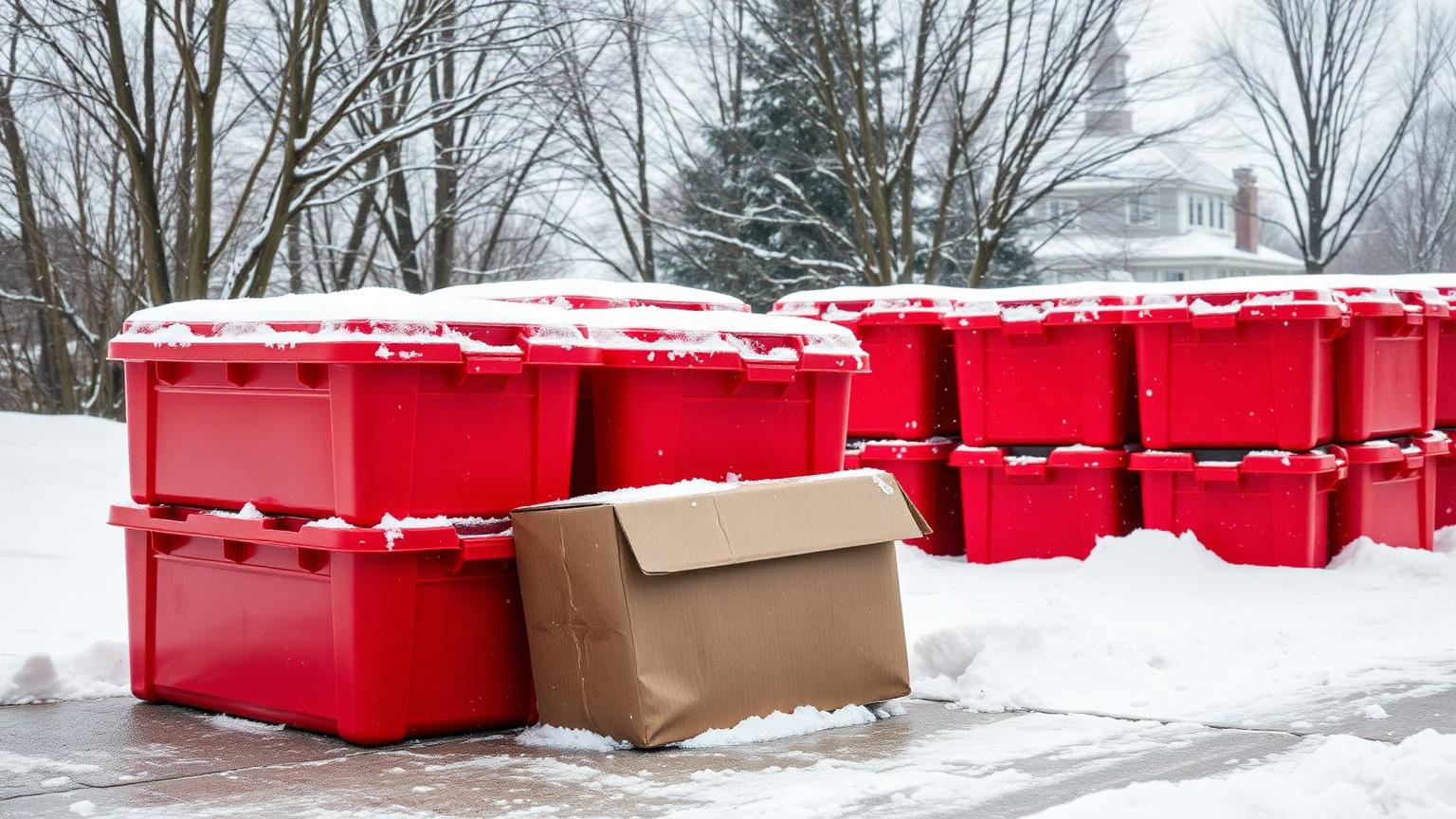
Latched plastic totes don't care about slush, salt, or a snow flurry between the door and the truck. They set down on wet ground and pick back up intact, and the lid keeps everything inside dry.
That's the entire pitch for a winter move: your containers stop being a variable.
Moving this winter?
Weatherproof latched totes and a dolly, delivered seven days a week.