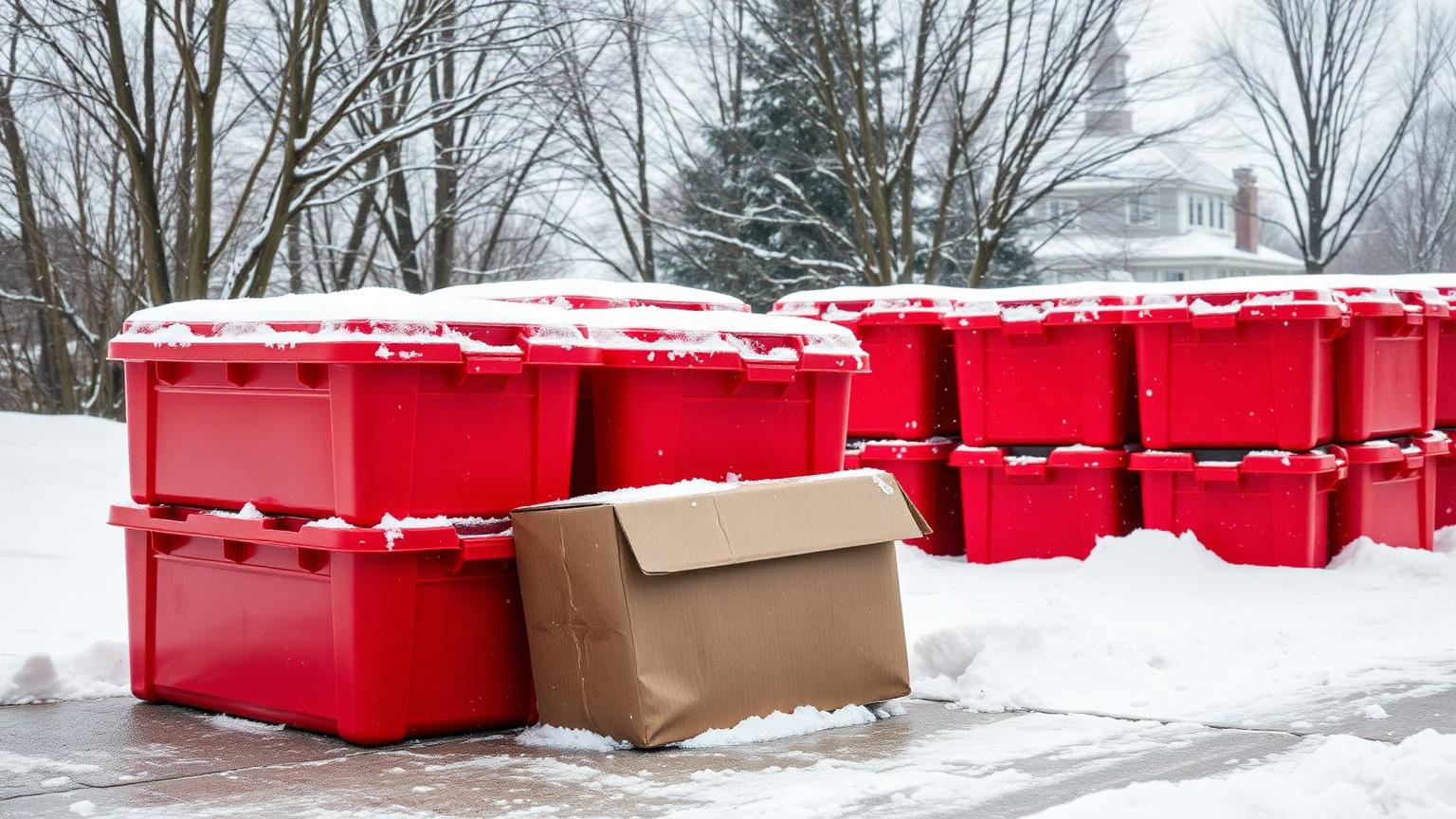
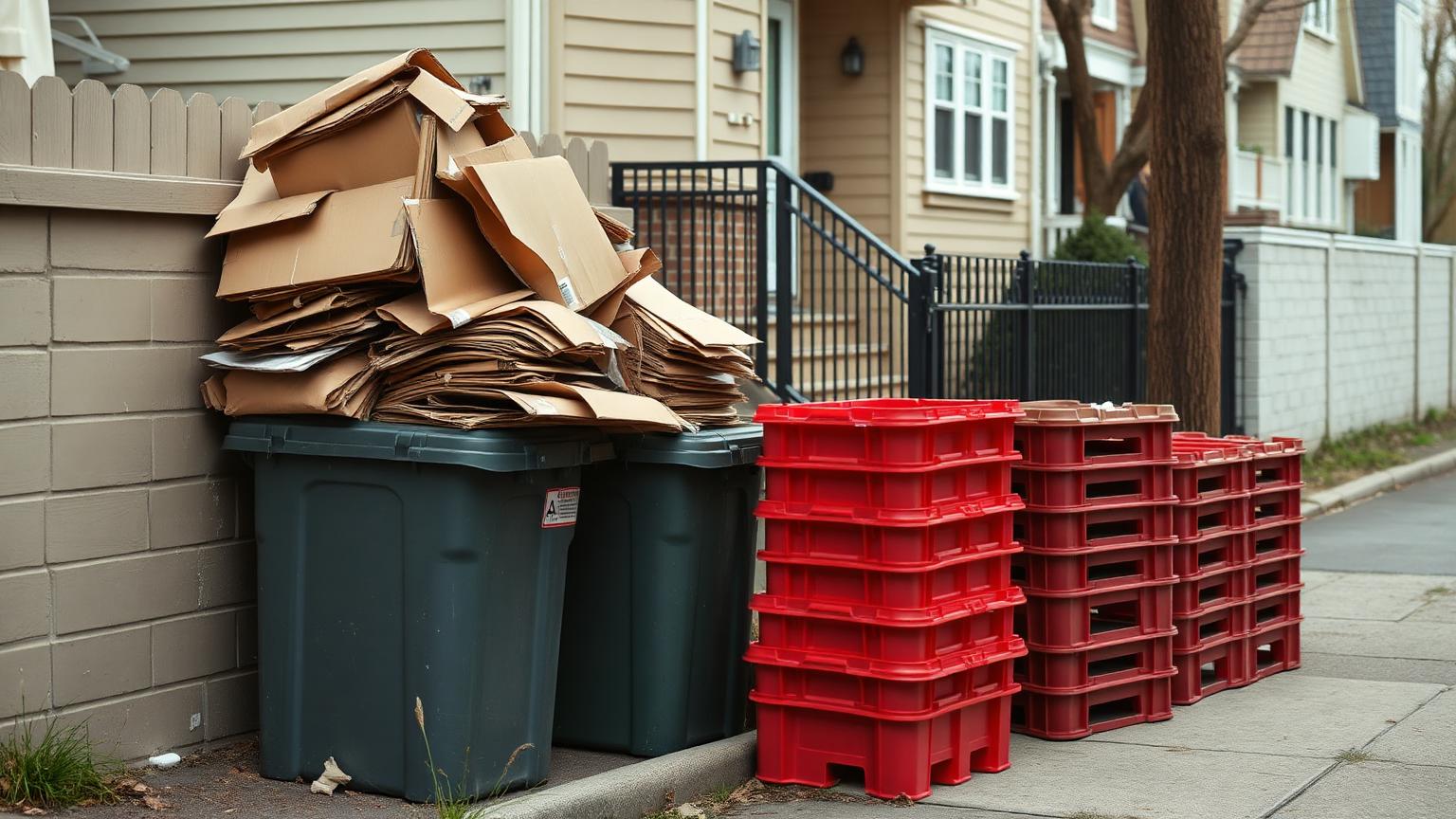
Drive down any east-side alley on August 16 and you'll see the same thing: cardboard stacked past the top of the bin, half of it rained on overnight.
Madison recycles a lot of it. But recycling isn't free, and wet or greasy cardboard often doesn't make it through at all.
The problem with moving cardboard specifically
- It's generated in a single enormous burst that overwhelms residential bins
- It gets rained on while it waits, and wet cardboard is a contamination problem
- Tape and labels have to be removed for clean processing, and rarely are
- Recycling is still a process with trucks, energy, and cost attached
Reuse beats recycling
The waste hierarchy puts reduce and reuse above recycling for a reason. A tote that runs hundreds of cycles displaces hundreds of single-use boxes, and none of those boxes get manufactured, shipped, or processed.
That's the actual environmental case here — not that plastic is inherently good, but that a container used four hundred times is a fundamentally different object than one used once.
What a zero-waste move looks like
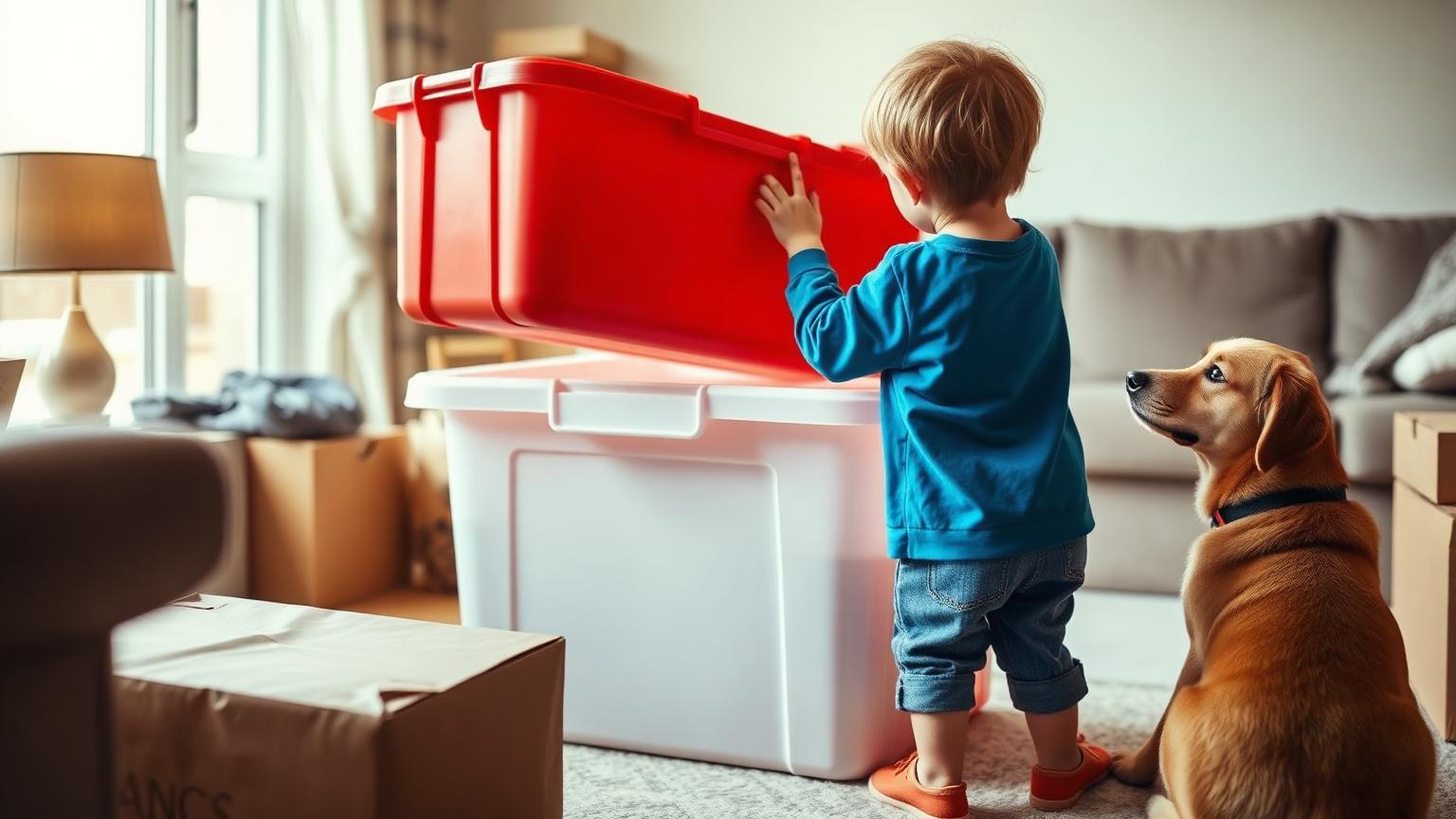
- Reusable containers, delivered and collected
- Reusable room labels instead of tape and marker
- Recyclable packing paper instead of plastic bubble wrap
- Moving blankets instead of wrapping furniture in film
- Donate and sell before you pack, not after you unpack
Madison already thinks this way
This city composts, bikes, and asks where things go. Moving is one of the few household events where the default option is still wildly wasteful — which makes it one of the easiest to fix.
Move without the cardboard pile
Our totes get reused hundreds of times. Nothing to flatten, nothing left in the alley.